
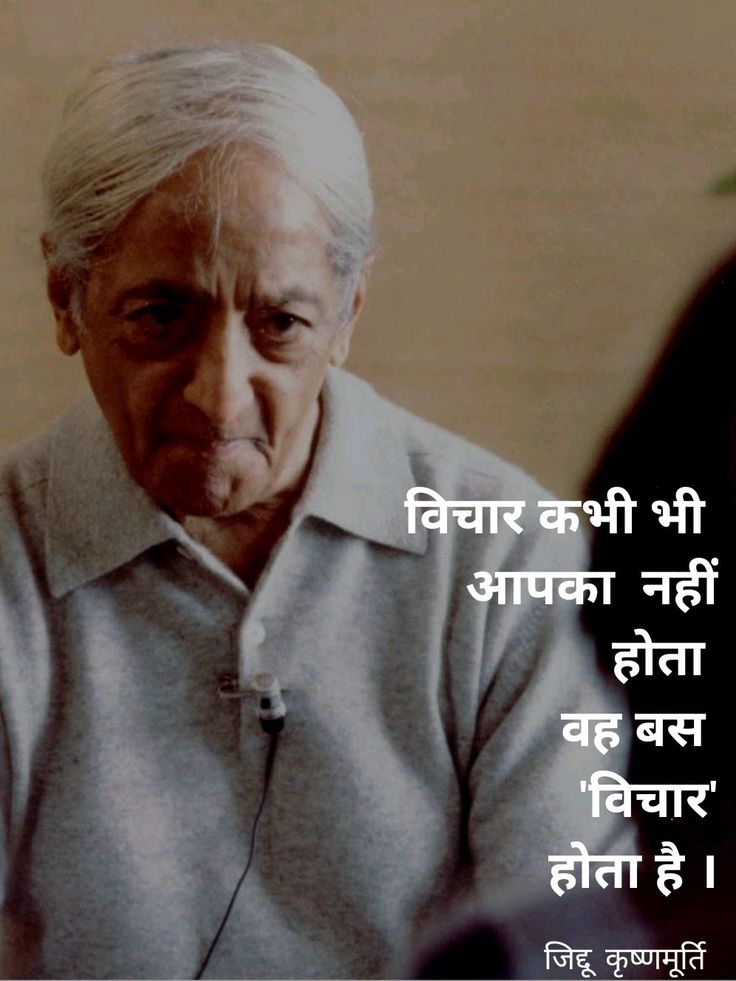
The greatest tragedy of modern human life is that a person wants to divide himself into fragments, and today’s youth experience this fragmentation very deeply. One personality appears on social media, another in college or at the workplace, and a third within the home and family. The smiles of Instagram, the achievements on LinkedIn, and the inner confusions together create a life in which the outer shine is greater, but inner stability is less.
Philosopher J. Krishnamurti described this fragmented consciousness as the root of human suffering. According to him, consciousness is not a separate mental activity but the entire field of life—thoughts, emotions, fears, desires, relationships, ambitions, and insecurities are all included within it. If a young person lives by dividing himself into different parts, he inevitably becomes trapped in stress, comparison, and dissatisfaction.
Today’s youth live under the pressure of competition. The race for career, economic insecurity, uncertainty in relationships, and the social pressure to “appear successful” together create a constant inner struggle. A person begins to suppress his real emotions and starts constructing an “ideal image.” Krishnamurti says that when a person lives only in a small part of his consciousness—within the boundaries of habits, beliefs, and social expectations—his attention becomes partial, not complete.
The age of social media deepens this fragmentation even further. The number of likes and followers begins to measure self-worth. Comparison becomes a permanent mental habit. In such a situation, young people move further away from their real emotions. According to Krishnamurti, the unconscious is not some mysterious force; it carries the same fears and limitations that are visible in the conscious mind. If a young person can look at his inner fears—the fear of failure, the fear of rejection, the anxiety of loneliness—without running away from them, only then can he be free.
Krishnamurti clearly distinguishes between concentration and attention. Today’s youth are learning concentration—for competitive exams, for skills, for achieving goals. But attention—meaning observing oneself without choice and without judgment—is an art that is gradually being forgotten. Attention means seeing one’s anger without suppressing it, understanding one’s jealousy without justifying it, and recognizing one’s ambition without condemning it. This awareness dissolves the inner divisions.
Young people often search for change in external achievements—a new degree, a new job, a new city. But Krishnamurti says that real change does not come from any technique or time-bound process; it arises from moment-to-moment awareness. How we speak, how we listen, how we react—being aware of these things is the true revolution.
Today society expects the youth to change the world. But according to Krishnamurti, before changing society, it is necessary to understand oneself. If young people recognize the fragmentation within their own consciousness—if they understand their inner conflicts, comparisons, and fears—they will not only become calmer individually but will also bring greater compassion and clarity into society.
In this digital and fast-moving age, where everything is expected instantly, Krishnamurti’s understanding of consciousness invites young people to pause and observe. Perhaps true success does not lie in likes, salary packages, or fame, but in that integrated consciousness where a person does not live in fragments but as a complete human being.
And it is possible that today’s youth, if they begin this journey of understanding themselves, may become the most peaceful and aware foundation of the society to come.
This article connects J. Krishnamurti’s concept of “one consciousness” with the life of today’s youth. According to Krishnamurti, human beings live by dividing themselves into separate parts, which creates tension, conflict, and dissatisfaction within them. Today’s youth experience this fragmentation even more deeply—one image on social media, another in the workplace or college, and a third at home.


Comments (0)