
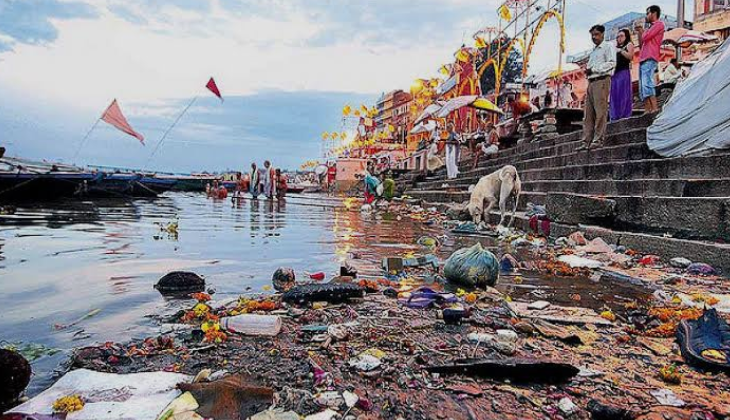
In India, rivers are not just water bodies—they are revered as “Mother.” From childhood, we are taught to respect rivers like the Ganga, Yamuna, and Narmada as life-givers. However, the harsh reality today is that the same rivers we worship are the ones we are destroying the most.
The condition of rivers in India is alarming. Reports suggest that nearly 70% of the country’s water resources are contaminated, and millions of liters of untreated wastewater are discharged into rivers every day. This pollution is not only caused by industries but also by our daily habits and religious practices.
A recent incident in Madhya Pradesh highlighted this issue, where thousands of liters of milk were poured into the Narmada River in the name of religious rituals. Similarly, ghee was offered into rivers during events in Prayagraj. While these acts may appear devotional, they have serious environmental consequences. Substances like milk and ghee reduce oxygen levels in water, leading to the death of aquatic life.
In addition, plastic waste, ritual offerings, idol immersion, and domestic garbage are making rivers toxic. The white foam seen in the Yamuna and the untreated sewage flowing into the Ganga are clear examples of this crisis.
Interestingly, some rivers like the Chambal remain relatively clean—not because they are worshipped more, but because human interference is minimal. Similarly, the Umngot River in Meghalaya remains crystal clear due to strict local practices and community responsibility.
Globally, there are successful examples of river restoration. Rivers like the Rhine in Europe and the Thames in England, once declared biologically dead, have been revived through strict laws and consistent efforts.
The real problem is not a lack of knowledge but human behavior. We often ignore small actions, thinking they don’t matter—but when millions of people repeat the same actions, the impact becomes massive.
It is time to modernize our traditions with environmental awareness. Using biodegradable materials, avoiding plastic, treating waste properly, and enforcing strict environmental laws are essential steps.
If we fail to act now, rivers may soon exist only in books and memories.


Comments (0)