
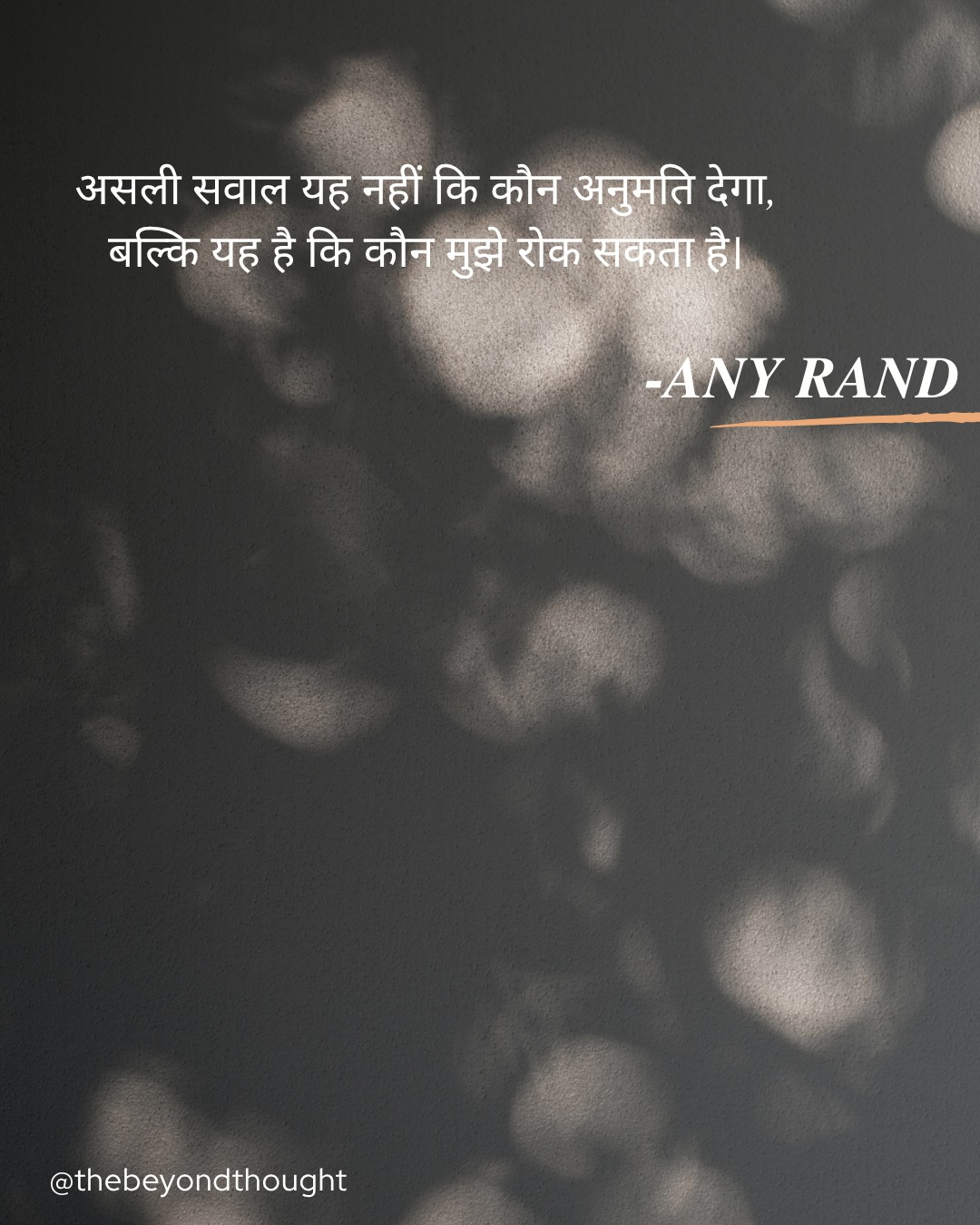
“The real question is not who will allow me, but who will stop me.”
This is not just a statement—it is a powerful definition of self-reliance and confidence. In society, people often wait for approval before making decisions—what will family say, what will society think, how will people react? But this mindset itself becomes the biggest barrier to growth.
Philosopher Ayn Rand challenged this thinking. According to her, if you have the ability and determination to achieve your dreams, you do not need anyone’s permission. The real obstacles are not external, but internal—our fears, doubts, and insecurities.
This idea highlights the importance of self-confidence. When a person believes in themselves, they rise above social limitations and create their own path. History shows that those who did not wait for permission were the ones who brought real change.
According to Ayn Rand, a truly independent person is one who makes their own decisions and takes responsibility for their outcomes. This mindset strengthens a person from within. Often, we stop ourselves because we fear failure or criticism. But this philosophy teaches us that fear is only a mental barrier.
When you ask yourself—“Who can stop me?”—you begin to recognize your inner strength. This question pushes you to break free from fear and move forward with courage.
This idea is not just about freedom, but also about responsibility. Making your own decisions is important, but so is accepting their consequences.
Ayn Rand’s philosophy does not suggest isolating yourself from society. Instead, it teaches you to live with independence while maintaining your identity.
In today’s world, where young people struggle with career and life decisions, this idea is highly relevant. It reminds us that the first step toward success is believing in ourselves.
Because if you don’t stand up for your dreams, no one else will