
The recognition system for teacher training institutions in Madhya Pradesh has once again come under scrutiny. The case of Shri Ram College, located in Mugaliya Kot village on the Bhopal–Vidisha Road, highlights the striking gap between official records and the reality on the ground.
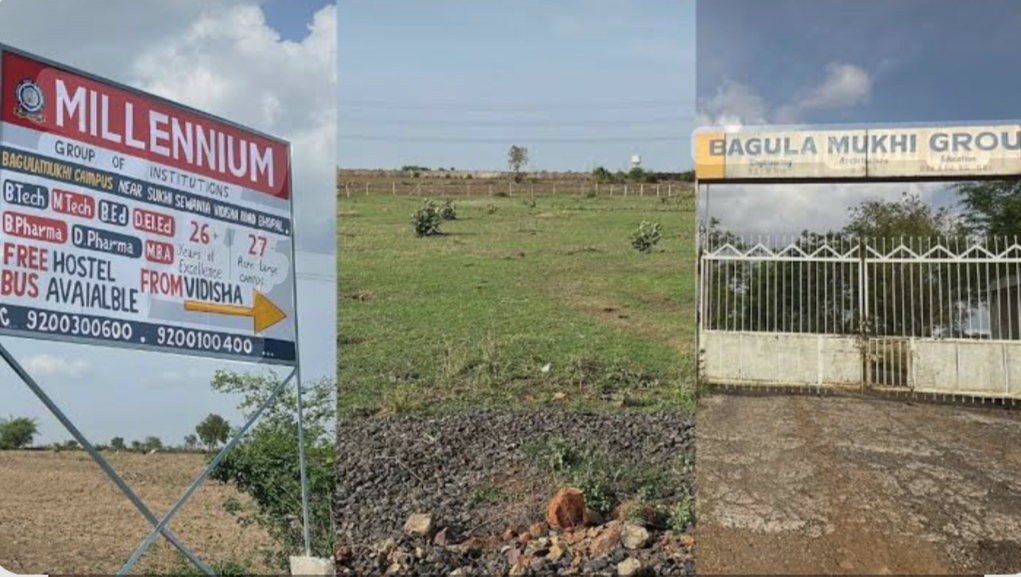
During a media ground investigation, the team visited Khasra No. 148/149/2/1, where Shri Ram College was officially recorded as operating. However, there was no college building, no classrooms, no library, and no students. Instead of an educational institution preparing future teachers, the site consisted of open land and cultivated fields. Local residents also stated that they had never seen a functioning college by that name at the location.
What makes the case even more surprising is that available records indicate that around 150 students graduated from this address every year for nearly a decade. According to the records, 100 students completed the B.Ed. programme, while 50 graduated from the B.Sc.-B.Ed. programme annually. This suggests that admissions, examinations, results, and degrees continued to be processed on paper despite the apparent absence of a functioning institution at the site.
Following the revelations, the University's Executive Council, in its meeting held on 24 June 2026, decided not to grant affiliation to the college. The council also resolved to appoint a retired District and Sessions Judge to investigate how admissions were granted, examinations were conducted, results were declared, and degrees were awarded when the college was allegedly not operating at its declared address.
The investigation also brought attention to records related to Baglamukhi College and Millennium College in the same area. This has raised broader concerns about whether the issue is limited to a single institution or reflects deeper problems within the system of affiliation and monitoring.
The Higher Education Department has stated that affidavits have been obtained from the concerned institutions. If the investigation confirms violations of rules, authorities may take action ranging from cancellation of affiliation to legal proceedings against those found responsible.
The entire episode has raised several important questions. If the college did not exist on the ground, who conducted inspections over the years? Who approved admissions and examination forms? And most importantly, who will be accountable for the degrees issued to students who were shown as studying at the institution? The answers are now expected to emerge through the ongoing investigation.
Comments (0)