
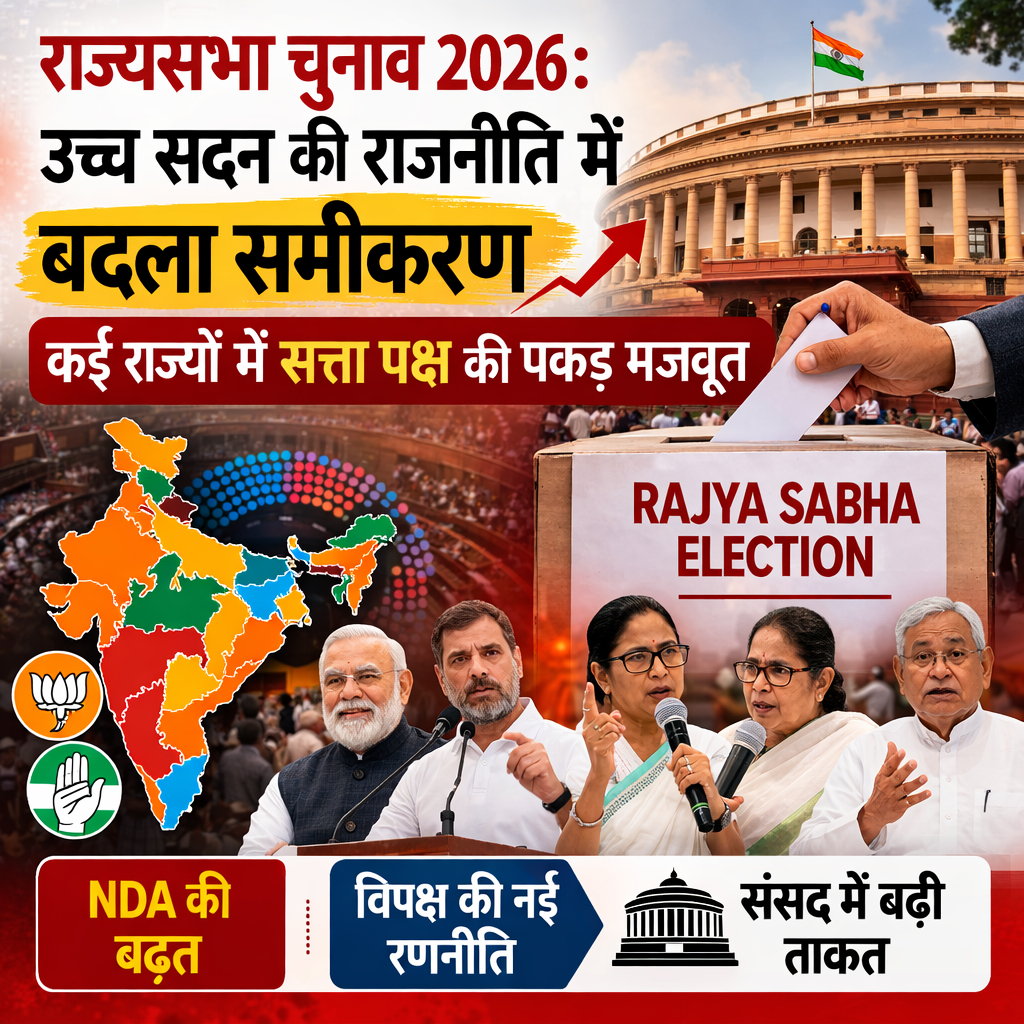
The results of the elections held for Rajya Sabha seats across the country have created new political equations at the national level. The elections, conducted for 37 seats across 10 states, saw several candidates being elected unopposed, while results for the remaining seats were declared after voting. Following the outcomes, fresh discussions have begun regarding the balance of power among political parties in the Upper House of Parliament.
The Rajya Sabha elections are considered crucial for political parties because strength in the Upper House plays a significant role in passing legislation. The gains made by ruling parties in several states suggest that their position in Parliament could become stronger in the coming period.
The contests in states such as Bihar, Maharashtra, and others attracted nationwide attention. In some places, intense political competition was witnessed over electoral strategies and the support of legislators. Meanwhile, opposition parties stated after the results that they would continue to raise public issues strongly in Parliament.
Political analysts believe that these results are not limited to wins and losses of seats but also indicate the direction of future politics. They will influence how legislative processes move forward in Parliament and how political parties shape their strategies in the coming time.

Comments (0)