
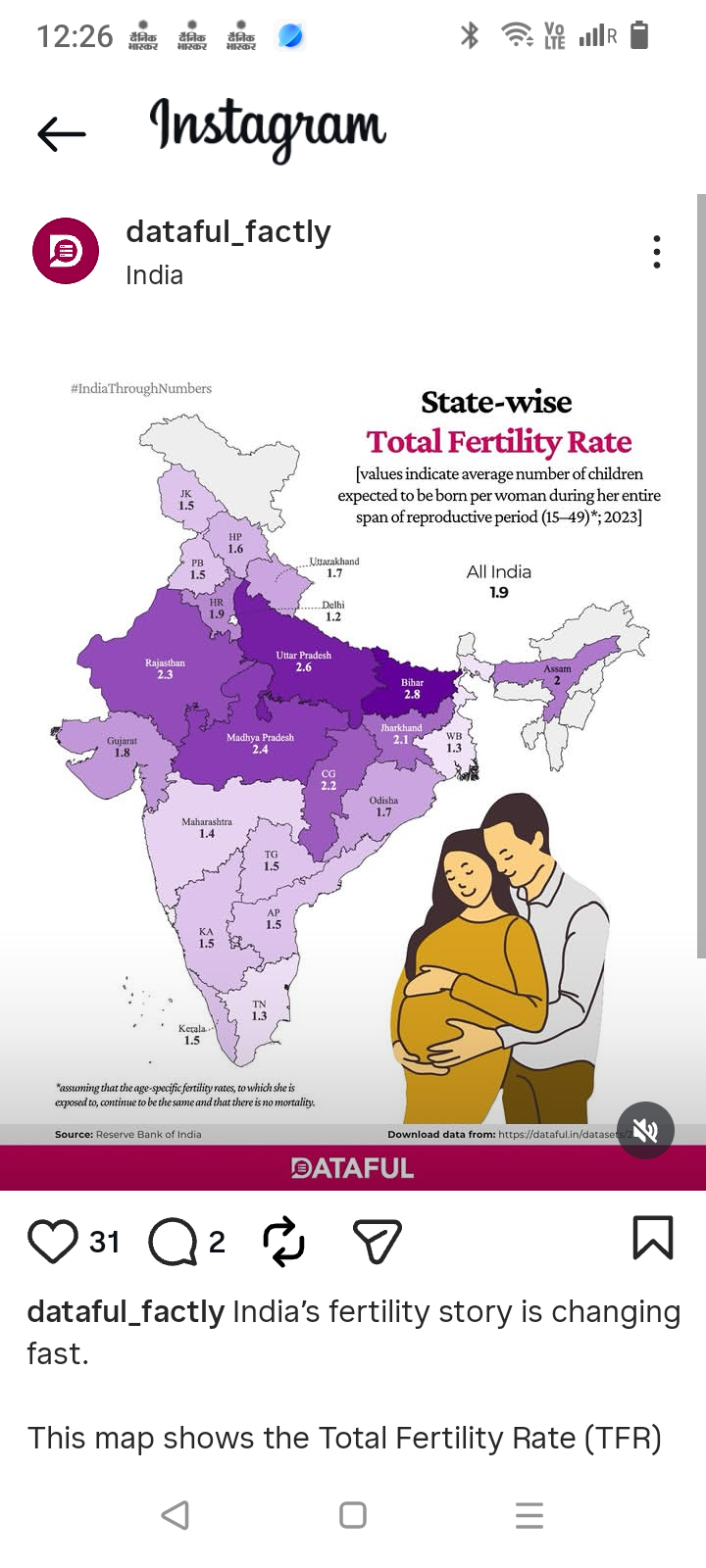
India’s Total Fertility Rate (TFR) has dropped to 1.9, below the replacement level of 2.1, indicating a significant shift in the country’s demographic trends and a gradual move toward population stabilization.
According to experts, the replacement level of 2.1 represents the average number of children needed for one generation to replace itself. When the fertility rate falls below this level, population growth tends to slow over time.
Health and population specialists attribute the decline to higher education levels, increased participation of women in the workforce, growing awareness of family planning, urbanization, and changing economic conditions.
While the falling fertility rate reflects positive social and economic changes, experts also warn that it may lead to challenges such as an ageing population and a shrinking share of the working-age population in the future. Long-term policy planning will be essential to maintain demographic balance and support sustainable economic growth.
The decline of India’s fertility rate below the replacement level is considered a major demographic milestone that could significantly influence the country’s social and economic policies in the coming years.




Comments (0)