
ISRO Space Vision 2047: Space Station by 2035, Human Mission to Moon by 2040; India’s Big Space Plan
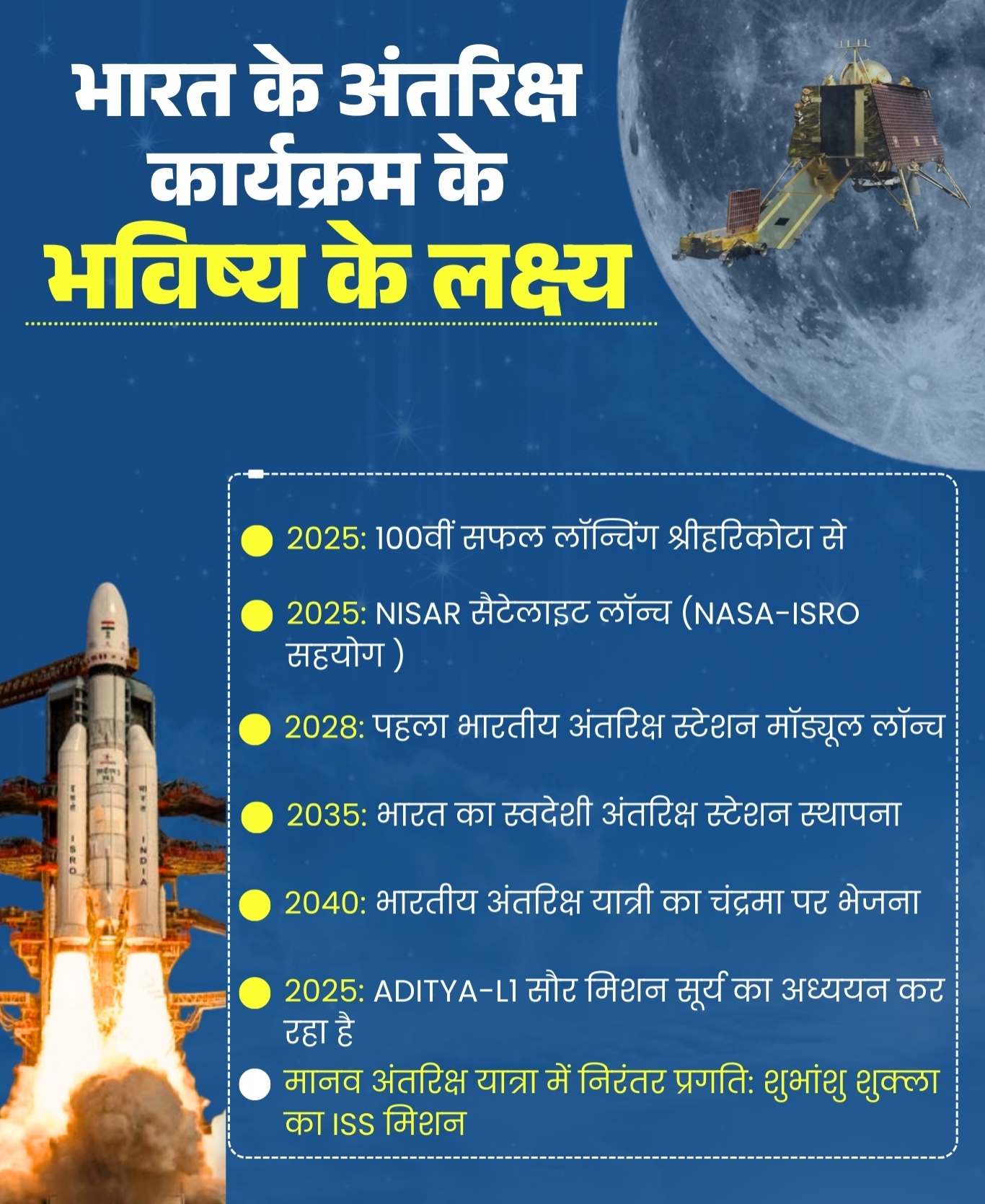
New Delhi: India has prepared an ambitious roadmap for the coming years in the space sector. Under Space Vision 2047, India aims to further strengthen its capabilities in human spaceflight, space stations, lunar missions and next-generation launch vehicles over the next two decades. The key targets of this vision include establishing the Indian Space Station by 2035 and sending Indians to the Moon by 2040.
Indian Space Station by 2035
India is working towards establishing the Bharatiya Antariksh Station (BAS). It is expected to become an important platform for scientific research in space and long-duration human missions.
The government has approved the plan to develop the first module of BAS, BAS-01, with a target of launching it by 2028. The fully developed station is planned to consist of five modules.
The space station will enable scientific experiments in microgravity. It could also provide an important technological foundation for future human space missions and lunar missions.
Human Mission to the Moon in 2040
One of the major goals of Space Vision 2047 is to take Indian astronauts to the Moon by 2040 using Indian technology and rockets. According to ISRO, achieving this goal will require the development of technologies such as heavy-lift launch vehicles, human-rated spacecraft, docking systems, high-capacity landers and safe re-entry systems.
This mission would mark a major step in taking India’s human space programme beyond Earth’s orbit and towards the Moon.
Gaganyaan to Lead the Way for Human Spaceflight
The Gaganyaan programme is considered an important part of preparations for the human lunar mission. Gaganyaan aims to send Indian astronauts into an orbit around 400 kilometres above Earth and bring them back safely. Under the current plan, the programme is being developed to carry three astronauts on a mission lasting around three days.
The technical and operational capabilities developed through Gaganyaan will help create a foundation for future human space missions.
The Next Phase of Lunar Missions
India’s space programme is not limited to human missions. Preparations are also underway for bringing samples back from the Moon and carrying out more complex lunar missions in the future.
ISRO’s upcoming programmes include missions such as Chandrayaan-4, which are considered important for expanding India’s lunar exploration capabilities. Along with lunar missions, work is also continuing on the study of Venus and other planets.
Focus on Next-Generation Launch Vehicles
Achieving the goals set for 2047 will require India to have more powerful and reliable launch systems. Therefore, ISRO is also working on next-generation launch vehicles and technologies required for human spaceflight.
The ability to carry heavy payloads into space, safely return spacecraft to Earth and develop technology for connecting different modules in space are important parts of this overall plan.
The Larger Goal of Space Vision 2047
The objective of Space Vision 2047 is to position India among the leading countries in space science and technology. The vision focuses on advancing human spaceflight, space stations, lunar exploration, planetary studies, advanced launch vehicles and greater participation of the private sector in the space industry.
For India, this plan is not merely about reaching the Moon. It represents a broader roadmap for developing long-term scientific and technological capabilities in space.
In the coming years, programmes such as Gaganyaan, Bharatiya Antariksh Station and Chandrayaan will play an important role in turning this vision into reality. If the planned targets are achieved on schedule, India’s space capabilities could become much broader and stronger by 2047.


Comments (0)