
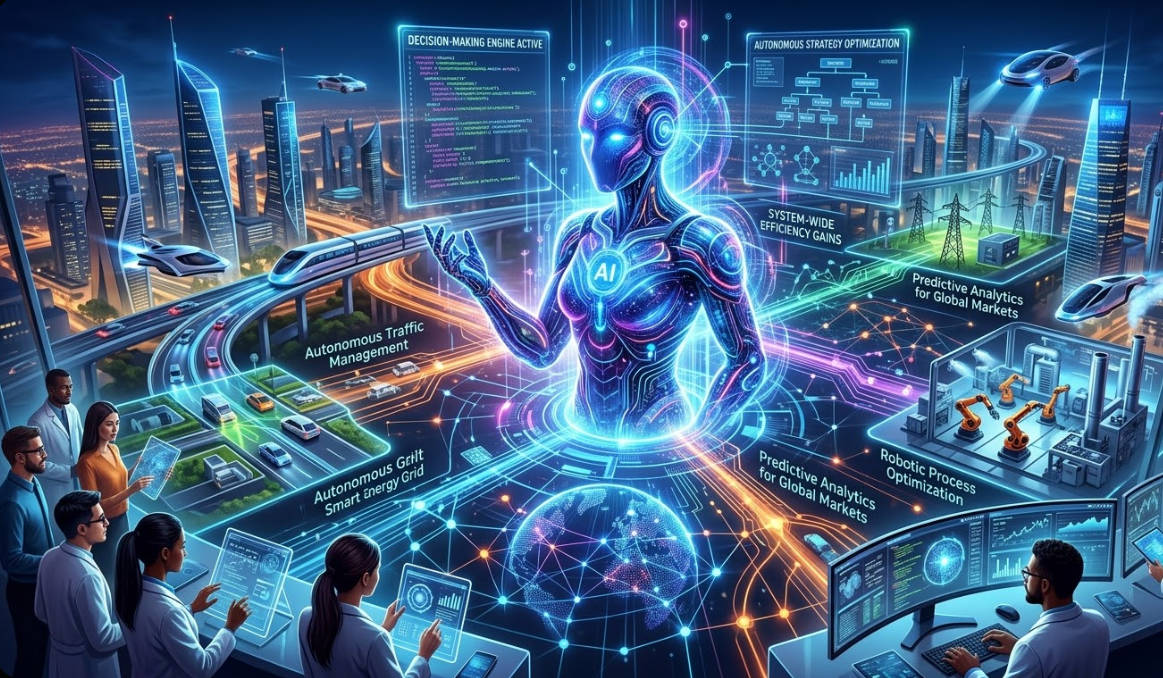
The world of technology is rapidly evolving, and Artificial Intelligence (AI) is now entering its next major phase in the form of AI Agents. These are advanced systems that go beyond simply following human instructions—they can independently make decisions and complete complex tasks.
In recent months, major tech companies such as Google, OpenAI, and Microsoft have accelerated their work on AI Agents. These systems are capable of writing emails, analyzing data, coding, and even assisting in business decision-making.
According to experts, AI Agents differ from traditional AI because they continuously learn and adapt to changing situations. For example, an AI Agent can analyze customer data for a company, identify problems, and even suggest solutions—without requiring constant human input.
This technology is not limited to the IT sector. Its applications are rapidly expanding across industries such as healthcare, finance, education, and defense. In healthcare, AI Agents can analyze patient reports, while in business, they can speed up automation and decision-making processes.
However, there are also concerns associated with this technology. Experts warn that giving AI Agents full autonomy could raise issues related to data security, incorrect decision-making, and lack of human control.
Despite these challenges, technology experts believe that AI Agents will significantly transform the future of work, enabling humans and machines to collaborate more efficiently and intelligently.




Comments (0)