
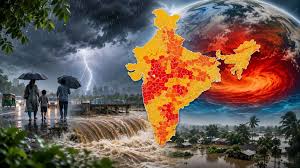
India’s southwest monsoon could face significant challenges this year as El Niño conditions are expected to strengthen over the Pacific Ocean, according to the India Meteorological Department (IMD). Weather experts warn that El Niño often leads to below-normal rainfall, higher temperatures, and prolonged dry spells across the country.
To address the potential impact, the central government has identified 197 districts as highly vulnerable and prepared state-wise and crop-specific contingency plans. The objective is to protect farmers and reduce agricultural losses in case of deficient rainfall.
According to the IMD’s latest forecast, India’s monsoon rainfall during June–September 2026 may remain around 90% of the Long Period Average (LPA), indicating the possibility of below-normal precipitation. Rainfall during the early weeks of June has already remained significantly below average in many regions.
Experts believe that if El Niño strengthens further, the sowing of major kharif crops such as rice, soybean, cotton, and pulses could be adversely affected. Reduced rainfall may also lower reservoir levels, increase pressure on groundwater resources, and push up food prices.
The IMD has indicated that central India, the monsoon core zone, and several agricultural regions are likely to receive below-normal rainfall, while only a few areas may experience normal or above-normal precipitation.
The government has advised states to strengthen water conservation measures, promote alternative crop planning, and improve irrigation management. The Ministry of Agriculture is also issuing weather-based advisories to help farmers prepare for changing conditions.
Meteorologists say the coming weeks will be crucial in determining the intensity of El Niño and its impact on the monsoon. A further rise in Pacific Ocean temperatures could have significant consequences for India’s agriculture, water security, and rural economy.



Comments (0)