
1 July 2026
India's rural employment system has undergone a major transformation as the Central Government has implemented the VB-G RAM G Act (Viksit Bharat – Guarantee for Rozgar & Aajeevika Mission – Gramin) with effect from today. The new law replaces the previous MGNREGA framework and introduces significant reforms to the country's rural employment guarantee system.
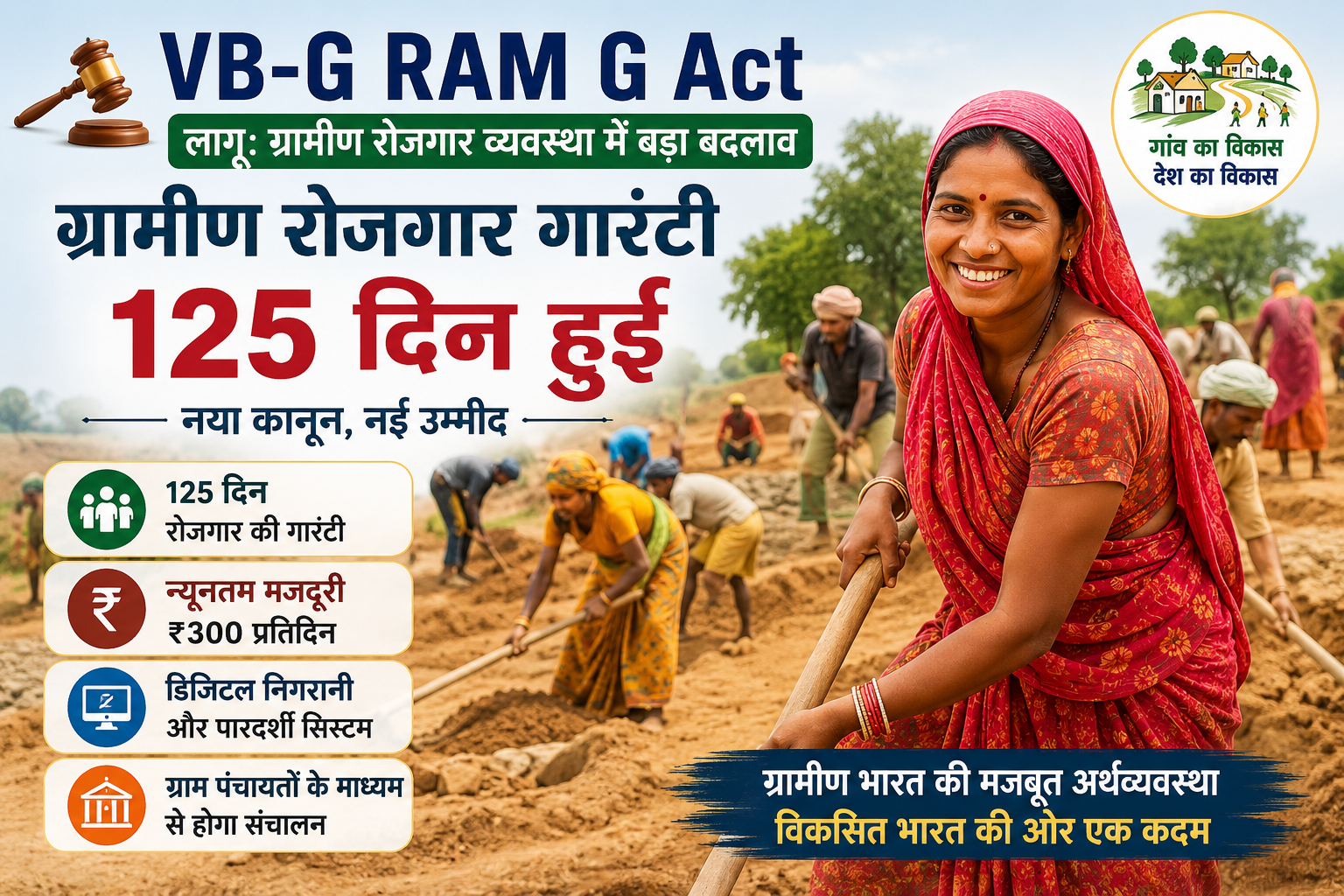
125 Days of Legal Employment Guarantee
Under the new law, rural households will now receive a legal guarantee of up to 125 days of employment in every financial year. This is an increase from the earlier limit of 100 days, providing rural workers with additional employment opportunities.
Key Changes Under the Scheme
Rural employment guarantee increased from 100 days to 125 days.
Rural wage rates revised, with a minimum daily wage of ₹300.
Digital monitoring and a transparent implementation system introduced.
Employment projects to be managed at the Gram Panchayat level.
The Direct Benefit Transfer (DBT) payment system strengthened to ensure timely wage payments.
New System Replaces MGNREGA
According to government documents, the new law completely replaces the MGNREGA Act, 2005, establishing a new framework for rural development and employment generation across the country.
Government's Claim
The government states that the new law will:
Increase rural household income.
Reduce migration from villages.
Create more sustainable employment opportunities in rural areas.
Strengthen the vision of "Viksit Bharat 2047."
Implementation Across States
According to reports, several states have already notified the scheme and are implementing it in a phased manner.
Conclusion
The VB-G RAM G Act is being regarded as a major reform in India's rural employment policy. With a 125-day employment guarantee and a digitally enabled implementation system, it marks a significant departure from previous schemes. Its actual impact on rural livelihoods is expected to become evident in the coming months.




Comments (0)