
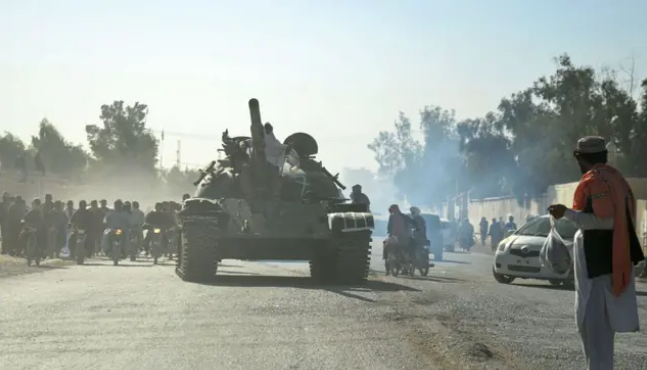
For many years, tensions have existed between Pakistan and Afghanistan due to border disputes and issues related to militant organizations. Pakistan has repeatedly accused militants from Tehrik-e-Taliban Pakistan (TTP) of launching attacks inside Pakistan from Afghan territory. However, Afghanistan’s Taliban government has consistently denied these allegations.
Another major source of disagreement between the two countries is the Durand Line, the disputed border that has remained a point of conflict for decades.
Rise in Attacks During 2025–26
During 2025–26, the number of terrorist attacks in Pakistan increased rapidly. The situation escalated significantly after a series of violent incidents.
On 6 February 2026, a suicide attack took place at a mosque in Islamabad, the capital of Pakistan. The attack killed 31 people. Pakistani authorities claimed that the planning of the attack was linked to elements operating from Afghanistan.
Later, on 16 February 2026, a major attack targeted a security checkpoint in Pakistan’s Bajaur district, resulting in the deaths of 11 soldiers and a young girl. The militant group Tehrik-e-Taliban Pakistan (TTP) claimed responsibility for the attack.
Pakistan’s Airstrikes
In response, Pakistan carried out airstrikes on 22 February 2026 in the Afghan provinces of Nangarhar, Paktika, and Khost. Pakistan stated that the strikes were aimed at destroying militant hideouts.
Afghan authorities, however, claimed that the airstrikes resulted in civilian casualties, including women and children.
Escalation of Military Action
On 26 February 2026, Afghanistan’s Taliban government responded with drone attacks and cross-border firing against Pakistan. Several clashes were reported along the border areas between the two countries.
Pakistan subsequently launched a military campaign named “Operation Ghazab-ul-Haq.” Pakistan’s defence minister stated that the situation had now become similar to an “open war.”
Pakistan reportedly conducted additional airstrikes near Kandahar and Kabul, while Afghanistan claimed that civilians were killed in those attacks. In retaliation, Afghan forces launched drone strikes targeting Pakistani military installations.
Humanitarian Impact
According to United Nations estimates, the conflict has already caused serious humanitarian consequences.
More than 50 people have been killed
Over 100,000 people have been displaced due to the violence.
Causes of the Conflict
Several factors have contributed to the escalation of tensions:
Activities of the militant group Tehrik-e-Taliban Pakistan (TTP)
Increasing terrorist attacks inside Pakistan
Pakistan’s accusations that militants are being sheltered in Afghanistan
The long-standing Durand Line border dispute
Deep political mistrust between the governments of both countries
Possible Scenarios Ahead
According to analysts, the Taliban government currently has three possible options:
Retaliatory strikes through drone attacks or cross-border operations against Pakistani military positions.
Diplomatic negotiations, potentially mediated by countries such as China or Qatar, or through the United Nations.
Limited conflict, where small-scale military clashes continue along the border without escalating into a full-scale war.
Regional Impact
Experts believe that the conflict could have wider consequences for South Asian security and regional stability. Refugee numbers could increase, and the economies of both Pakistan and Afghanistan may suffer further damage.
In addition, the strategic policies of regional powers such as China, Iran, and India may also shift in response to the evolving situation.
The conflict between Pakistan and Afghanistan is the result of years of unresolved tensions. After recent militant attacks and airstrikes, the situation has become increasingly serious. If a diplomatic solution is not found soon, the confrontation could continue for a prolonged period.


Comments (0)